Have you ever wondered how Greece, sitting at the crossroads of East and West, can serve as a unique cultural, economic, and geopolitical bridge?
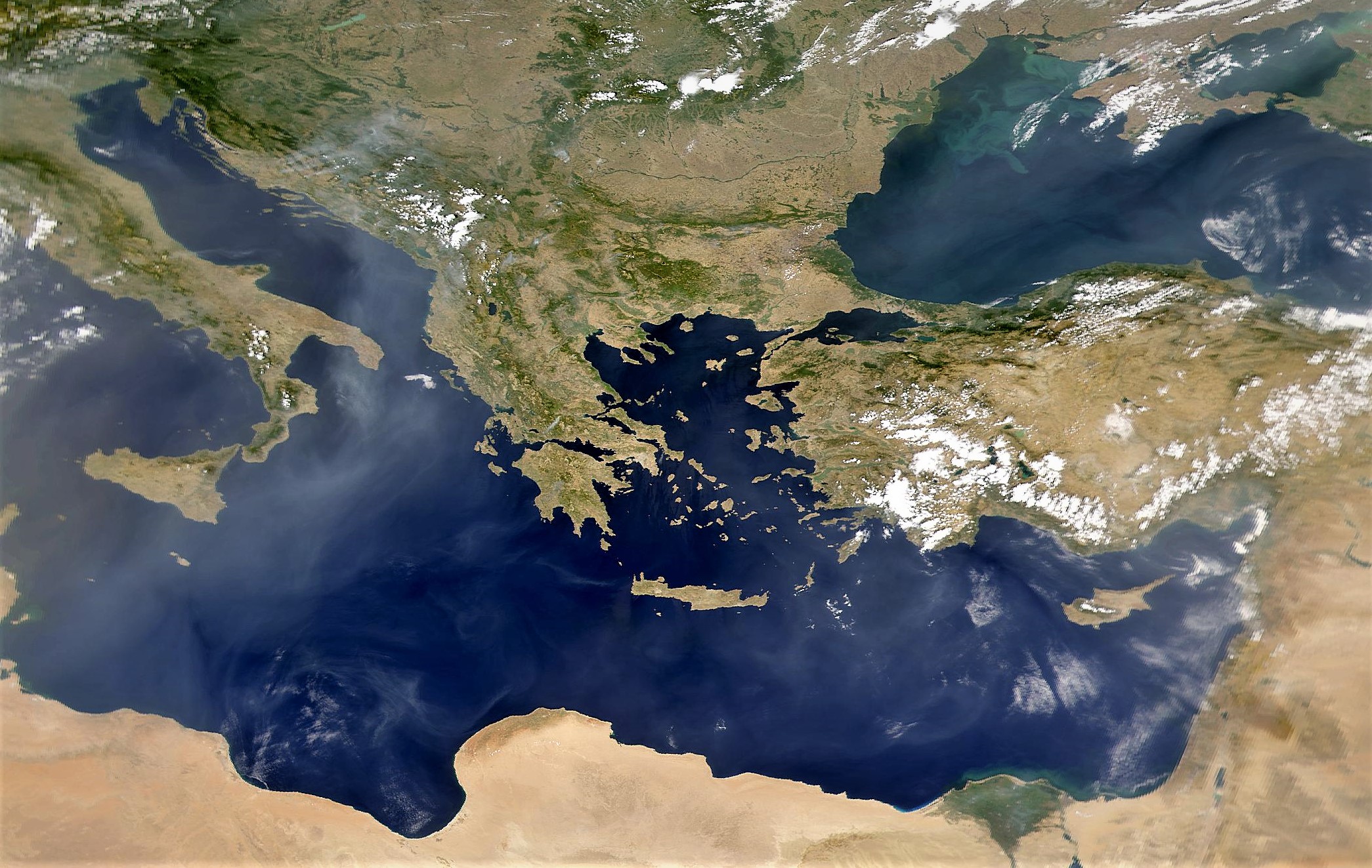
For many, Greece looks like nothing more than a tiny dot on the map, famous either for its History or for its debt. But if we zoom in on reality, another perspective appears: Greece’s geopolitical position turns it into a key strategic player between East and West. Still, this role demands two things: (a) Greece must strengthen itself internally, and (b) it must actually function as a bridge between these two completely different worlds. It’s worth stressing that this text doesn’t claim to present the ultimate truth or the perfect solution—it simply highlights, after research, a perspective often missing from public discussion.
Historical Roots of a Dual Identity
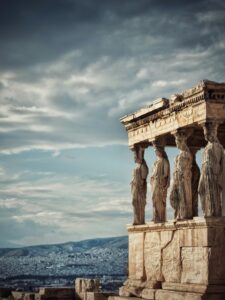
Think back to the historical maxims teachers forced us to memorize at school. From them, one conclusion jumps out: our country inherits both classical antiquity and Byzantium. A mix of Western DNA and Eastern mentality.
In antiquity, Greece became the cradle of Western civilization, introducing democracy, philosophy, and logical thought. Byzantium picked up the torch, enriching it with Orthodox Christianity and an eastern style of governance (not always brilliantly, of course). Later, the Ottoman era deepened the “oriental” elements in our cultural identity. Even in antiquity itself, Greece reached toward the East—whether through Byzantium or the Macedonian Empire.
Greece’s geopolitical position turns it into a key strategic player between East and West
Reflecting on our history as a nation, we can say that since 1830 the Western and Eastern elements have coexisted in balance. In our strategic alliances, we chose—rightly—to side with the Western Bloc. European culture dominates inside Greece, yet the Eastern traits shouldn’t be dismissed as minor. This short historical journey of our identity confirms that Greece can serve as a bridge between the two worlds, without ever detaching from the Western alliance.
Internal Reconstruction
As already mentioned, it borders on absurd to argue that Greece can play an active role in the Balkans (to start with), in Europe, or on the global stage if it doesn’t first strengthen itself from within. A similar logic guided Charilaos Trikoupis: he focused on reforming the country before attempting to realize the “Great Idea.” Today, too, Greece must build institutional, economic, defense, and social strength as a prerequisite for any credible foreign policy strategy.
Society must regain trust in the state and its institutions. Justice needs to act independently, institutions must actually function, public administration has to work efficiently, and transparency should become the norm. The state also has to secure, at last, a strong, productive, competitive, and outward-looking economy, built on investment, small and medium enterprises, shipping, logistics, and the primary sector (which scandals have recently plagued). The goal is to create the infrastructure—ports, airports, railways—that will turn the country into a hub for the wider region.
At the same time, Greece’s geopolitical position demands investment in defense. That means boosting self-sufficiency, producing weapons systems domestically, and tightening strategic ties with allies such as the U.S., the EU, France, and Israel.
Finally, no real progress stands without social cohesion and education: modernizing education, fostering innovation, promoting openness, and renewing demographics are the foundations of a resilient Greece.
Greece as a bridge of West and East
It requires constant, serious, and consistent presence in international forums and organizations with one clear message: Greece stands as the pillar of stability, the bridge between West and East.It is a country that firmly belongs to the West, keeps its Western alliances intact, yet also opens doors and builds connections with Africa and with the East.
Once Greece secures a solid internal framework—something that should have existed long ago—it can serve as a diplomatic, energy, and trade bridge between West and East, while also acting as a guarantor of peace.
Geopolitical and Diplomatic Role
A core mission of Greek diplomacy is to become—or to persuade global leaders that it can become—a balancing force in the Eastern Mediterranean. That mission is neither easy nor instant. It requires constant, serious, and consistent presence in international forums and organizations with one clear message: Greece stands as the pillar of stability, the bridge between West and East.
It is a country that firmly belongs to the West, keeps its Western alliances intact, yet also opens doors and builds connections with Africa (as noted in a previous article) and with the East.
Energy and Transit Hub
One of Greece’s major advantages is the potential to extract energy resources in the Aegean. But this lies at the core of disputes with Turkey, which for years has been pushing for a so-called “co-exploitation of the Aegean,” a notion far outside the norms and logic of international law. Issues such as the extension of territorial waters in the Aegean to 12 nautical miles and the exploitation of its resources fall under unilateral sovereign rights, rights tied directly to national sovereignty, which require neither negotiation nor permission from anyone.
If Greece taps its reserves, it can first become the leading energy player in the Balkans and then the entry point for Eastern countries into Europe. At the same time, Greece must deepen energy partnerships with Cyprus, Egypt, and Israel by building new pipelines and scaling up LNG projects such as those in Alexandroupolis and Crete.
Cultural and Religious Diplomacy
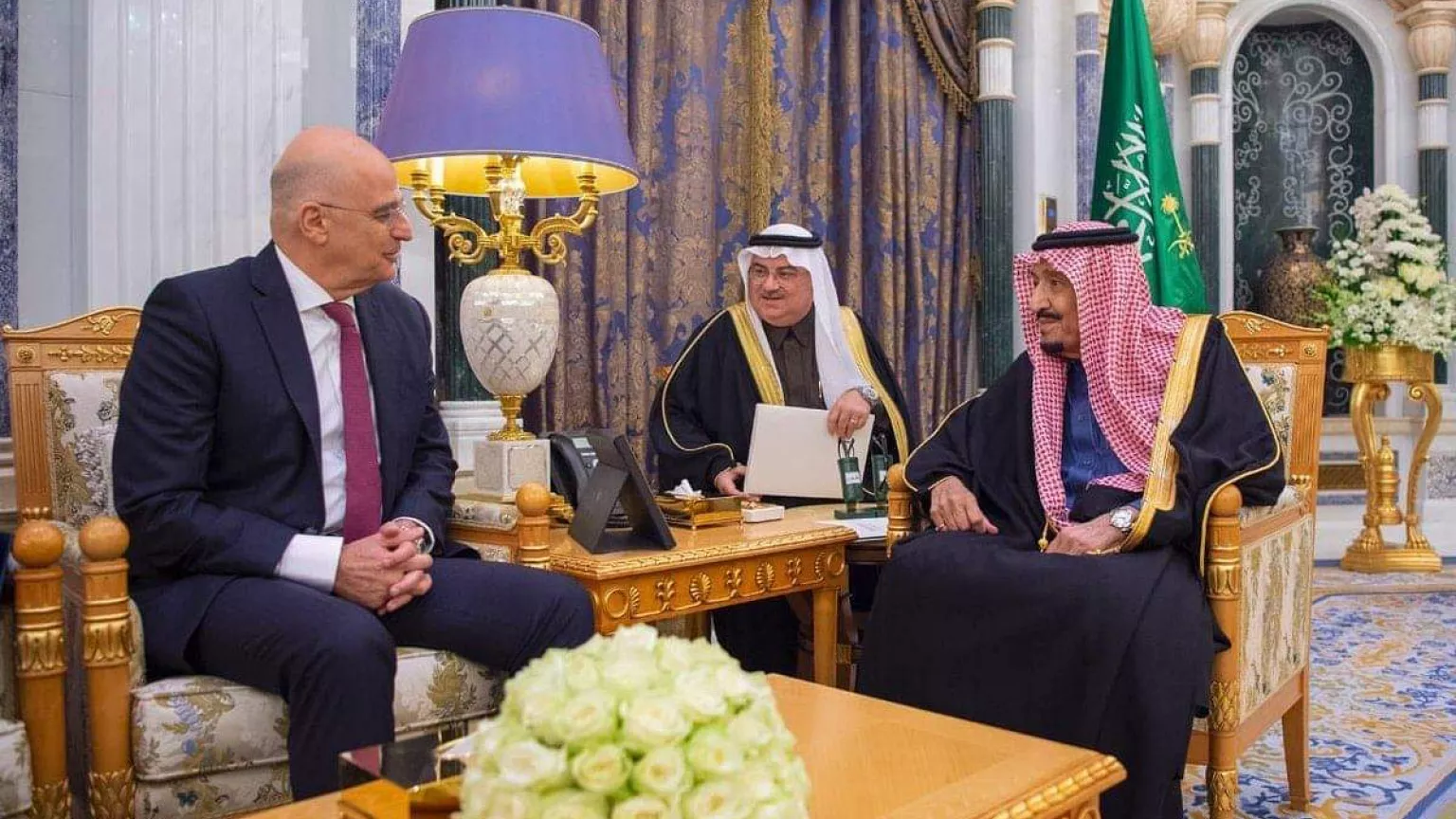
Another strong card in Greece’s diplomatic arsenal is soft power, projected not only to the West but mainly to Eastern states. Our immense cultural and historical wealth can fuel cultural exchange programs: international conferences in arts, traditions, history, and more, with countries like Jordan, Saudi Arabia, the UAE, and Qatar. Such initiatives can strengthen ties and position Greece as a trusted partner in dialogue through the delicate channel of culture.
Orthodoxy also plays a role. Beyond supporting Christianity in the East (e.g., Syria), the Ecumenical Patriarchate can act as a mediator in various issues. Greece, through its relationship with the Patriarchate, stands to benefit greatly from this role. And we shouldn’t overlook the Greek diaspora—an underused but powerful asset. Mobilizing it can promote Hellenism abroad while consolidating Greece’s position as a bridge between East and West.
Turkey and the Balance of Power
No analysis of this subject can ignore Turkey, the neighbor striving, and already beginning, to position itself as the bridge of the two worlds. As noted earlier, Greece must adopt a consistent and serious stance toward Turkish provocations. Talk of “calm waters,” bows, and speeches in Turkish by Greek officials don’t solve the problem; they normalize Turkey’s violations and help it appear as the “reliable partner” it wants to be seen as.
Greece’s position must be crystal clear. Through long-overdue diplomatic efforts, Athens should prepare the ground for extending territorial waters to 12 nautical miles and present itself—not Turkey—as the guarantor of stability. And we must keep stating the obvious: a country that repeatedly violates international law, ignores its rules, and has illegally occupied half of European territory for over 50 years cannot belong to the West and cannot guarantee stability. By holding this line, Greece can more credibly establish itself as the most reliable interlocutor between the West, the Balkans, and the Middle East.
Conclusions: Greece as a Strategic Bridge
As the analysis above suggests, geography and geopolitics offer Greece a unique opportunity: to connect West and East—two worlds diametrically opposed yet increasingly interdependent. Once the necessary internal reforms take place, Greece can fully leverage its geopolitical capital. Geography has placed us between these two worlds; now it’s up to us to build the bridge.
Let’s drop the ideological blinders that keep us at a distance from the East. Yes, we belong in the West, and rightly so. But that doesn’t mean we can’t reach out to the East—often to mutual benefit. And even if we hesitate, we may have no choice: otherwise, Turkey will seize that role. And by then, it may be too late.
So let’s act before it is too late. Before we’re left sitting in the stands, watching the game instead of playing it.