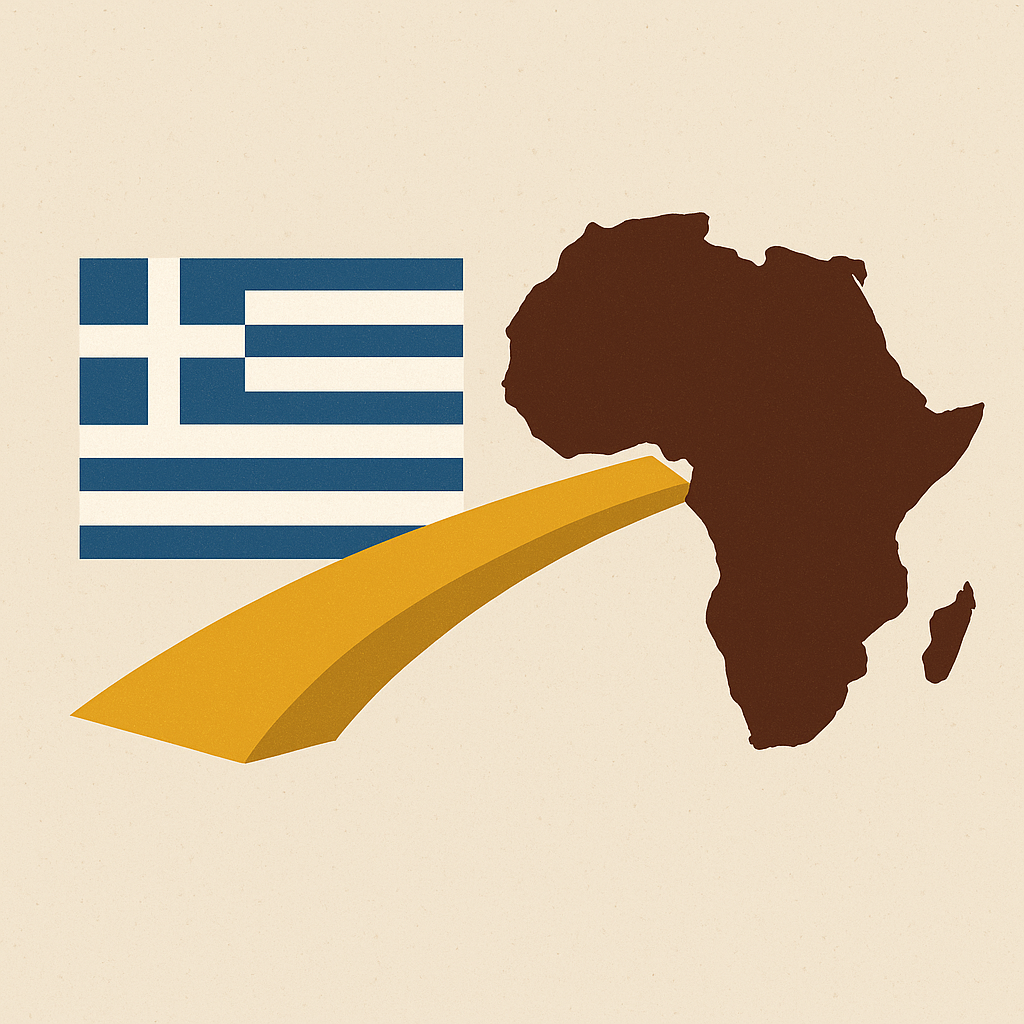
Greece and Africa. Africa and Greece. Across the decades, Greece has stood at major geopolitical crossroads—sometimes as an observer, sometimes as a secondary partner, and rarely as a player of influence. Yet its relationship with Africa, apart from ties with Egypt and Zambia, remains one of the greatest blind spots in Greek strategic thinking. And yet, Africa—a young, rising, fragmented, yet determined continent shaping its place in the 21st century—is arguably the most overlooked field of opportunity for Greek foreign policy, the economy, and culture.
This article not only highlights Africa’s geostrategic and economic importance but also lays out why Greece must finally develop a systematic, proactive, and multi-level strategy toward the African continent. Not as a colonial power, nor as a charity NGO, but as a modern, equal, and intelligent player in an international arena that grows more competitive by the day.
Africa’s Geopolitical Weight and Greece’s Absence
Africa isn’t one entity. It’s 54 states, hundreds of cultural, ethnic, linguistic, and geoeconomic realities. It’s the fastest-growing population on Earth: by 2050, a quarter of humanity will live in Africa. It’s a continent of demographic youth, with 70% of citizens under 30. It holds vast resources—raw materials, strategic metals, arable land, energy reserves—and emerging urban markets.
Greece must recognize this geopolitical reality and focus on strategic sectors like renewable energy and infrastructure, especially in countries such as Ethiopia and Nigeria, where green energy and upgraded infrastructure are critical needs.
Major powers haven’t missed this. China has entrenched itself through the Belt and Road Initiative. The US, UK, and France have reengaged via development diplomacy and military presence. Turkey has built an entire network of embassies, trade missions, military cooperation, and educational institutions. Russia made a comeback post-2019 with Wagner, arms deals, and political influence.
Where does Greece stand on this map? Almost nowhere. A handful of embassies, even fewer trade missions, and minimal political investment. This absence isn’t a coincidence. It’s strategic inertia—and that makes it dangerous.
From Inertia to Strategy: Why Greece–Africa, and Why Now?
Greece has every reason to engage Africa smartly, realistically, and consistently.
First, geography: Egypt, Libya, Tunisia—they’re right across from us, gateways to Africa’s interior. The Eastern Mediterranean isn’t isolated from North and Sub-Saharan Africa. They’re connected by trade, energy routes, migration flows, and security challenges. If Greece wants credibility in the Eastern Mediterranean, it cannot ignore Africa.
Second, Greece has a unique advantage: it carries no colonial legacy, no historical baggage of oppression. It has never appeared in Africa as a domineering power. It can position itself as an equal, reliable partner—a rare stance for a European country, and a strategic asset still untapped.
Third, Greece can serve as a platform for African countries to access Europe—through ports, logistics, educational institutions, and cultural networks. We can be Europe’s gateway that feels like collaboration, not customs control.
Fourth, there’s political and economic incentive. Greek foreign policy has been stuck for decades, obsessed with the (admittedly crucial) Greek-Turkish agenda. It’s time to breathe, to deepen and broaden our strategy beyond crisis management. Africa offers not just thematic expansion—but a profound upgrade of our strategic outlook.
The Political Proposal: A National Strategy for Africa
This isn’t about launching ephemeral initiatives in Africa. We need a coherent, cross-party, long-term national strategy. Built on four pillars:
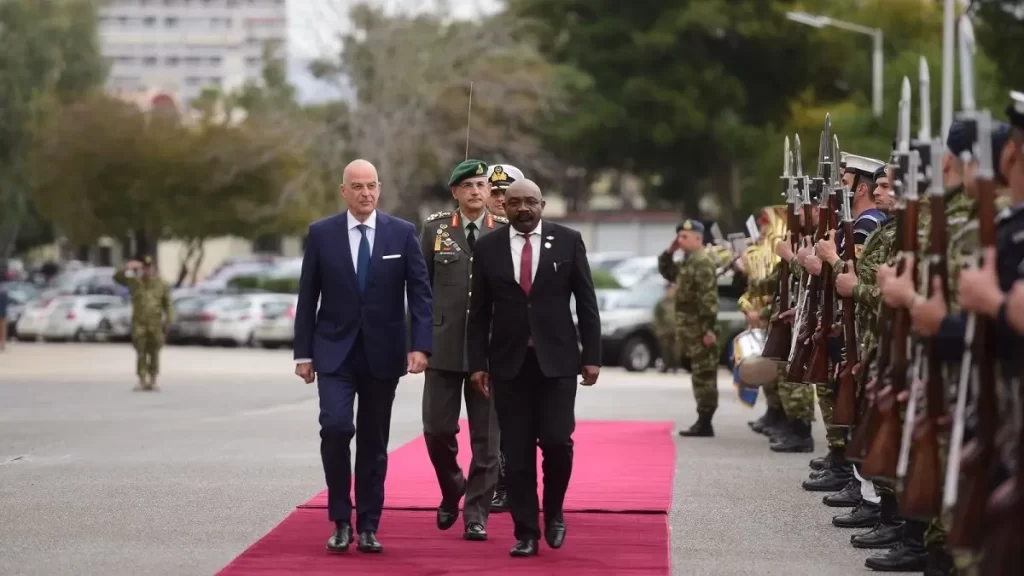
Diplomatic Presence. Greece needs embassies, delegations, and networks. We can’t sustain a negligible diplomatic footprint in Sub-Saharan Africa. We should establish at least ten new diplomatic missions in the next decade, prioritizing key countries like Nigeria, Ethiopia, Senegal, South Africa, and Angola.
Nigeria: Africa’s largest economy and energy powerhouse.
Ethiopia: a fast-growing economy, geostrategically crucial in the Horn of Africa.
Senegal: politically stable and commercially strategic.
South Africa: an economic and political hub with potential in tourism and technology.
Angola: rich in energy, promising in infrastructure.
Greece currently lacks embassies in most of these nations—an urgent gap that must be closed.
Development Diplomacy. Greece can play a role in infrastructure, energy, water management, and agricultural know-how. The expertise is there. What’s missing is the political will and risk appetite.
Education and Culture. We should launch scholarship programs for African students, promote Greek language and culture, and foster cultural exchanges. Greece can position itself as a reference point for Orthodoxy, the arts, shipping, tourism, and the tradition of dialogue.
Digital and Energy Cooperation. Greece can help create platforms for collaboration in green energy, innovation, logistics, and food tech. Africa needs solutions, and Greece can build partnerships with Greek and European companies to offer tailored responses to local needs.
The Greek Spirit and Africa’s Future
Many still view Africa as something exotic, distant, even chaotic. That mindset isn’t just outdated—it’s dangerously short-sighted. Africa is the future. The next wave of global dynamism will break from there. That’s where the next great contests of influence, economy, and values will unfold. If Greece doesn’t show up, it will simply remain a spectator. But this isn’t just about geopolitics or economics. It’s symbolic. We can present a different cultural proposal: the Mediterranean as a bridge, Orthodoxy as a community, Education as a right, Dialogue as power. We can show that Greece isn’t a small country—it’s a great idea that knows how to survive, expand, and engage.
If not now, when?
A strategy for Africa is no luxury. It’s a prerequisite for Greece to expand its geopolitical, economic, and cultural footprint. The early steps with Egypt and Zambia show potential, but we’re still far behind. In a world being dismantled and rebuilt at once, Greece must choose its ground. Either we stay trapped in parochial regionalism—or we claim our role in new arenas.
Sources
- Enterprise Greece (2023) Greece Increases Engagement with Africa. Enterprise Greece Newsletter. Available at: https://newsletters.enterprisegreece.gov.gr/newsletter-articles/greece-increases-engagement-with-africa (Accessed: 20 April 2025).
- Ministry of ForeignAffairs (Greece) (2022) Η νέα Εθνική Στρατηγική Εξωστρέφειας της Ελλάδας. Υπουργείο Εξωτερικών. Available at: https://www.mfa.gr/epikairotita/diloseis-omilies/o-upourgos-exoterikon-k-nikos-dendias-parousiase-ti-nea-ethniki-stratigiki-exosterikotes.html (Accessed: 20 April 2025).
- European Economic and Social Committee (2021) Equal Partnership between EU and Africa. EESC News. Available at: https://www.eesc.europa.eu/en/news-media/news/eu-africa-eesc-proposes-equal-partnership-based-human-rights-and-development-democratic-structures (Accessed: 20 April 2025).
- Eurostat (2023) Africa-EU – Key statistical indicators. European Commission. Available at: https://ec.europa.eu/eurostat/statistics-explained/index.php/Africa-EU_-_key_statistical_indicators (Accessed: 20 April 2025).
- Ministry of Environment and Energy (Greece) (2023) Έγκριση περιβαλλοντικών όρων EuroAfrica. ΥΠΕΝ. Available at: https://ypen.gov.gr/euroafrica-interconnector-egkrisi-perivallontikon-oron/ (Accessed: 20 April 2025).
- Ministry of Foreign Affairs (Greece) (2022) International Development Cooperation Policy. Ministry of Foreign Affairs. Available at: https://www.mfa.gr/en/foreign-policy/global-issues/international-development-cooperation.html (Accessed: 20 April 2025).
- Ministry of Rural Development and Food (Greece) (2004) Greece’s Contribution to Desertification Control Programs. Ministry of Agriculture. Available at: https://www.minagric.gov.gr/images/stories/docs/agrotis/XOROTAJIA/Greece_DCP_2004_eng.pdf (Accessed: 20 April 2025).
- African Union (2023) African Continental Free Trade Area. AfCFTA Official Website. Available at: https://au-afcfta.org/ (Accessed: 20 April 2025).
- UNCTAD (2023) Economic Development in Africa Report 2023: The Potential of AfCFTA. United Nations Conference on Trade and Development. Available at: https://unctad.org/publication/economic-development-africa-report-2023 (Accessed: 20 April 2025).
- MinistryofForeignAffairs (Greece) (2024) Λίστα ελληνικών διπλωματικών αποστολών στην Αφρική. ΥΠΕΞ. Available at: https://www.mfa.gr/africa/ (Accessed: 20 April 2025).
- Armakolas, I. (2023) Greece’s Changing Foreign Policy in a Multipolar World. ELIAMEP Papers. Available at: https://www.eliamep.gr/publication/greeces-new-geopolitical-footprint/ (Accessed: 20 April 2025).
- Petrou, E. (2022) The Geopolitics of the Eastern Mediterranean: Greece, Egypt and Africa. South EU Summit Reports. Available at: https://www.south-eu.org/2022/02/greek-egyptian-cooperation-and-africa/ (Accessed: 20 April 2025).
Africa is the start of that choice. And history, as always, waits for the bold.