The Phoney War and the Atlantic Front
This article, The Phoney War and the Atlantic Front, is the second installment in a series commemorating eighty years since the end of World War II. It focuses on the period 1939-1940. Europe found itself in a strange state of waiting, caught between the invasion of Poland and the fall of France. This period became known as the Phoney War. Beneath the apparent calm, naval forces clashed across the Atlantic. The maritime front was rapidly becoming a crucial arena that would influence the course of the war. Meanwhile, European land forces were preparing for the German invasion a strike that would go down in history as France’s greatest defeat.
To follow the series, read the previous article [here].
Preparations and Uncertainty in Britain After the Declaration of War
Sirens sounded across Britain shortly after the official declaration of war against Germany. Prime Minister Neville Chamberlain announced that hostilities had begun. In reality, despite promises from Western powers to support Poland, no concrete aid had been provided. The Allies were uncertain about how to act even after declaring war.
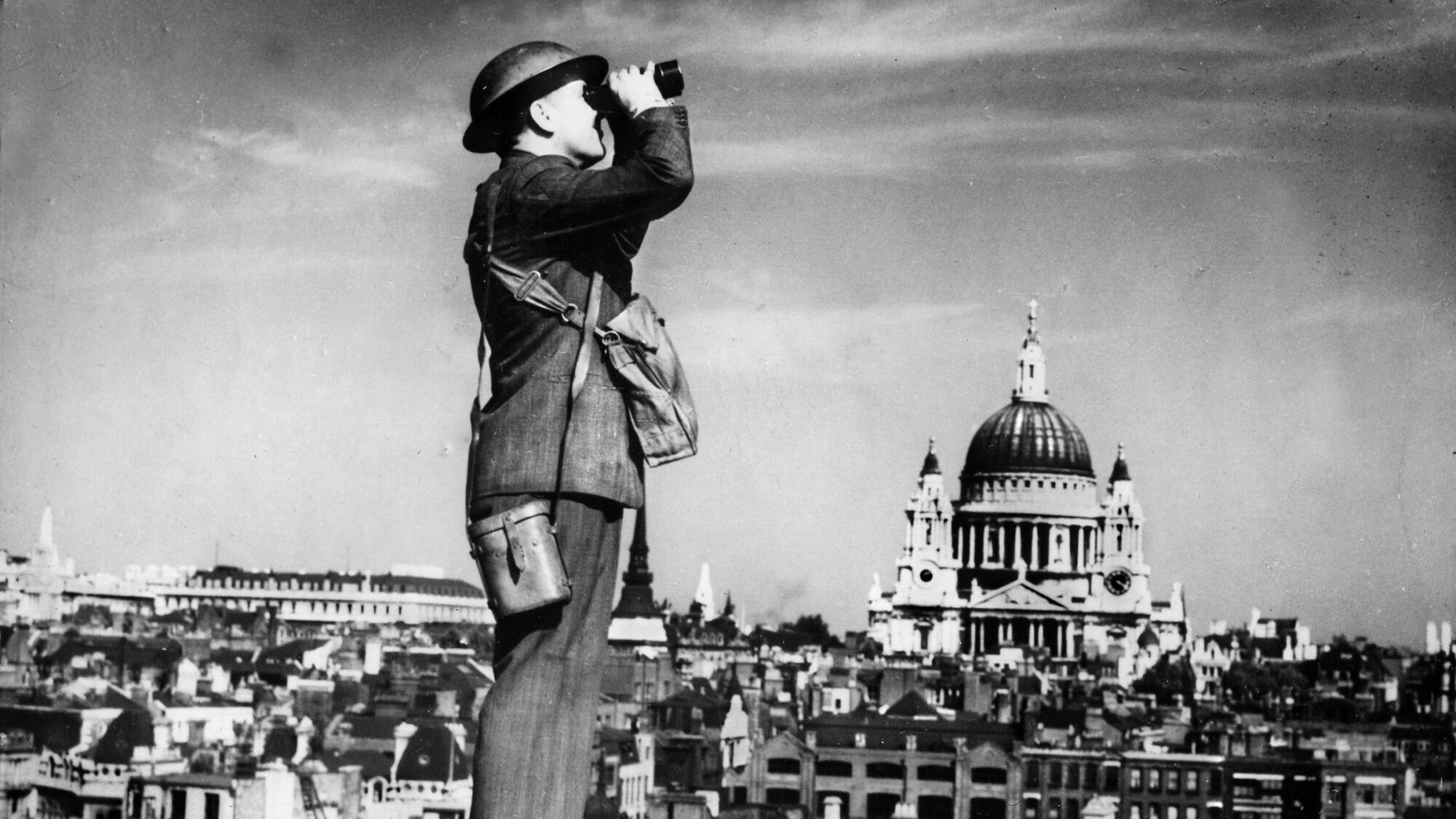
All major European powers began mobilization. In London, citizens started implementing protective measures against air raids. Anti-aircraft weapons were deployed in major cities, shelters were opened, and even the Underground was repurposed as a refuge for civilians. For safety reasons, children were evacuated to the countryside, away from the war zones and major cities.
Due to lingering fears from the First World War, chemical warfare drills were conducted. Gas masks were initially distributed to civilians, followed by blackout measures in major cities to protect against German bombing raids.
Meanwhile, the British Expeditionary Force was sent to northern France. More than 100,000 soldiers were deployed, bracing once again for the horrors reminiscent of the First World War. French forces advanced into the Saar region but refused to continue, eventually retreating within the range of French artillery. The initiative remained firmly in Hitler’s hands as he prepared his next moves.
After Poland: Germany Pauses Before the Major Leap West
Germany’s Blitzkrieg against Poland was a tremendous success. They conquered the country in less than a month. This marked the beginning of Hitler’s ambitious plans. Later, in November 1939, he ordered his generals to prepare for the invasion of France. Just two months after the successful occupation of Poland. However, his generals refused. The bulk of the German army remained in the east and first needed to move to the French borders. The campaign had also inflicted significant losses: several Panzer Mark II tanks were destroyed by Polish artillery, a vulnerability stemming from their light design and tendency to advance ahead of infantry and supply lines. Additionally, one-quarter of the German air force had been shot down. Reluctantly, Hitler accepted the need to wait until the spring of 1940.
When the Skies Revealed the Allies’ Limits in the Phoney War
The French and British began to recognize the strategic importance of air power. The British had already concluded that bombers would play a key role in the battle for France. On September 4, 1939, the RAF conducted a daylight bombing raid against German ships, losing 7 of its 30 aircraft. In subsequent raids, even more than half of the aircraft were often lost. It soon became clear that these were not mere coincidences or bad luck: the British bombers were simply unsuitable for such operations. They were outdated and unreliable. Consequently, the RAF shifted to nighttime raids and dropped propaganda leaflets instead of bombs to avoid provoking reprisals. The aim was to weaken German morale and encourage internal resistance against Hitler.
A New Front: The Battle of the Atlantic
With the German offensive at a standstill and the skies clear of aircraft, attention turned to a new front: the Atlantic. Germany’s navy was still in its infancy, with a full build-out not expected until 1948. Despite this, German naval forces under Karl Dönitz sought to disrupt Britain’s supply lines through attacks and fleet presence in the Atlantic Ocean. The German fleet targeted merchant ships and Allied supply routes. Achieving this required 300 ocean-going submarines, though only 38 were available. Nevertheless, the Germans deployed all of them in the first days of the war. On September 3, 1939, the German U-boat 30 sank the passenger ship SS Athenia without warning, mistaking it for an armed merchant vessel. One hundred and fifty people died, including 26 Americans.

Naval Clashes in the Atlantic
Compared to Germany, the Royal Navy was much larger. Unlike Germany, Britain had 12 battleships and 5 aircraft carriers, which it used to enforce a naval blockade on Germany. The British believed that repeating the strategy from World War I would starve the Germans into surrender. However, the Royal Navy had very few escort vessels. As a result, many merchant ships sailed alone across the ocean, making them prime targets for German submarines. The British had significantly underestimated the German navy. On September 17, 1939, the German U-boat 19 sank the British aircraft carrier HMS Courageous. On October 14, 1939, HMS Royal Oak was sunk by a German submarine while docked at the Royal Navy base in Scapa Flow. Meanwhile, in response to the British blockade, the Germans also deployed their ships into the Atlantic, displaying boldness and audacity. On November 22, German battleships Gneisenau and Scharnhorst attacked a British convoy in the Atlantic.
The Graf Spee and the First British Victory
Nevertheless, the German ship with the most significant impact in the Atlantic was the Graf Spee. Its long-range guns allowed it to strike any ship within reach, while its speed enabled it to evade enemy vessels. The Graf Spee had been patrolling both the South Atlantic and the Indian Ocean even before the war. Three British cruisers inflicted substantial damage on the ship, forcing it to take refuge in the port of Montevideo, Uruguay. When the British fleet approached, and despite having permission to leave, the Germans chose to scuttle the ship rather than surrender it to the enemy. This is considered the first clear victory of the British over the Nazis.
The Problem of Magnetic Mines and Its Solution
From the start of the war, the British continuously lost ships to mines laid by the Germans. What worried them most was that the ships did not even have to touch the mines; they would detonate simply when a vessel passed nearby. Fortunately for the British, on November 22, 1939, the RAF spotted German planes laying mines at the mouth of the Thames. The mines were retrieved for study and were found to explode via the magnetic signal emitted by ships themselves. The British solved the problem by installing a copper cable around their ships to neutralize the signal, significantly reducing the threat of magnetic mines.
The Phoney War: Stalemate and Preparations in the Winter of 1940
Entering 1940, the war had reached a stalemate. Neither side escalated the conflict beyond patrols, training, and efforts to remain safe and in good condition during the harsh winter. The winter of 1940 is historically remembered as one of the coldest in modern European history. This period of inactivity became known among the Allies as the “Phoney War.” By the end of the winter, the Germans had managed to move their entire army from Poland to the Belgian border. However, they could not match the size of the French army, which had 100 divisions along the Franco-Belgian frontier. This imbalance forced the British Expeditionary Force under John Vereker to follow the defensive orders of French General Maurice Gamelin. The French hoped that the Maginot Line, the fortified defenses along the French-German border, would deter the Germans. In reality, the Allies had no clear plan to stop Germany. Still exhausted from World War I and militarily locked into its doctrines, they simply dug trenches and concentrated their forces, waiting to repel the Germans. Notably, none of their commanders anticipated that Germany might pursue entirely different strategies or targets.
Conclusion: The Phoney War and Preparing for the Storm Ahead
The Phoney War was a period of strange inactivity, yet full of developments that foreshadowed the coming storm. In the Atlantic, the struggle for control of supply lines had already begun, testing British resilience and demonstrating Germany’s ability to strike critical blows. On land, European forces remained trapped in the shadow of the previous war, unable to realize that the opponent was preparing to execute an entirely new form of warfare.
As the winter of 1940 drew to a close, Europe’s balance of power appeared fragile, and the conflict that would reshape the continent’s map had not yet truly begun. Meanwhile, thousands of kilometers north, a different front had already ignited: the Soviet Union and the small nation of Finland stood on the brink of a war that would astonish the world.
In the next part of the series, we examine the Winter War of 1939—a conflict that, despite its limited scale, exposed critical weaknesses in the Soviet Union and demonstrated that even a small country, with planning, determination, and knowledge of its terrain, could resist a giant.