On 11 December 2025, the government of Bulgaria resigned amid weeks of sustained mass protests and mounting public dissatisfaction, marking yet another chapter in the Balkan republic’s prolonged political turbulence. The resignation, tendered by Prime Minister Rosen Zhelyazkov shortly before a scheduled parliamentary no-confidence vote, underscores deep structural challenges in Bulgaria’s political system, including persistent corruption, socioeconomic inequality, and a fragmented party landscape that has hindered stable governance.
The Immediate Catalyst? Protests and Government Resignation
For many, the immediate trigger for the government’s resignation was a wave of nationwide protests that emerged in late November 2025, initially in response to the coalition’s controversial draft budget for 2026. The proposed budget included increases in social security contributions and taxes on dividends, measures that, while put forward as fiscal adjustments, were widely perceived by citizens as poorly conceived and symptomatic of deeper governance failures. Despite withdrawing the budget plan, it seems that the government could not stop public anger, especially coming from Gen Z.
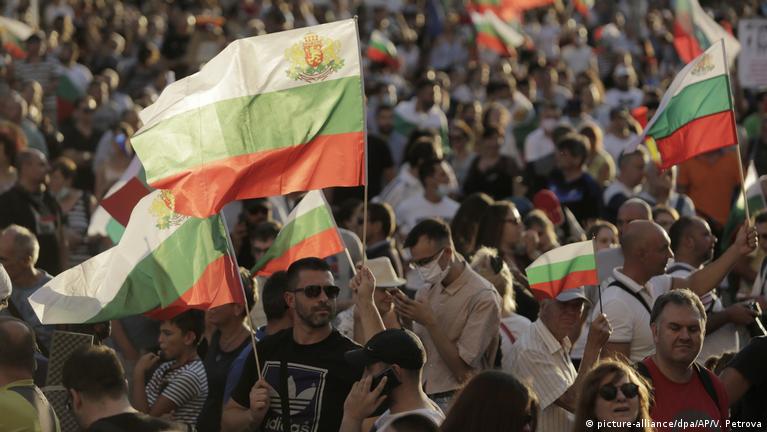
Protesters, tens of thousands across Sofia and other major cities, voiced broader grievances beyond specific tax policy. Demonstrators called out entrenched corruption, lack of accountability, and the perceived failure of political elites to address everyday economic and social hardships. Many saw the demonstrations not merely as a protest against a specific policy, but as an expression of widespread dissatisfaction with the political elite as a whole. It should be highlighted, however, that a great sense of patriotism and unity was evident in the atmosphere as almost every protestor held a Bulgarian flag on their shoulders, or wore a beanie with Bulgarian symbols.
Notably, the demonstrators did not associate the character of the protests as pro- or anti-European. During a personal conversation with some of the protestors in the last demonstration in Sofia’s centre, they admitted that their main goal was to express their indignation regarding the widespread economic corruption in the political system, as well as when it comes to specific political figures, such as Delyan Peevski, the leader of the “Movement for Rights and Freedoms” (which is representing the interests of Muslims, especially Turks and to a lesser extent Pomaks and the largest share of Romani votes). Peevski has been a highly controversial figure in Bulgarian politics, business and media and is currently sanctioned by both the UK and the United States for corruption, bribery and embezzlement.
Prime Minister Zhelyazkov announced his resignation live on national television, acknowledging the public’s discontent and stating that the government “must respond to the voice of the people”. His cabinet had been in power for less than a year, and the move came just weeks before Bulgaria’s planned entry into the eurozone on 1 January 2026, a significant milestone that now faces some uncertainty due to the ensuing political turmoil. Nevertheless, entering the eurozone turned out unavoidable since the agreements had been signed according to EU laws, despite the urging by the 3rd party in the Parliament, the far-right, extremist, and ultranationalist “Vazrazhdane,” which has submitted a proposal to the parliament to postpone Bulgaria’s entry into the Eurozone by one year. Kostadin Kostadinov, the leader, has expressed the view that the country is being pushed “illegally” into the eurozone in the absence of a regular government and a functioning budget. He has also warned that euro adoption under current conditions risks triggering sharp price increases and repeating a “bad version of the shock therapy of the early 1990s”.
“This (resignation) is the first step towards Bulgaria becoming a normal European country,” said Asen Vassilev, leader of the opposition PP-DB (electoral coalition between “We Continue the Change” and “Democratic Bulgaria”), the party that filed a no-confidence motion. Boyko Borissov, leader of the centre-right GERB party that led the outgoing coalition, defended its record, which included ushering Bulgaria into the European Union’s open-border Schengen zone and completing preparations to join the euro. “We have nothing to be ashamed of over these past 11 months,” Borissov told a news conference at his party’s headquarters. “After today, we will work to win the (next) elections,” he concluded.
A Pattern of Instability: Frequent Elections and Fragmentation
Bulgaria’s political instability is not a novel phenomenon; rather, it reflects a pattern of recurring governmental shortfalls. Over the past several years, Bulgaria has undergone a series of national elections – seven general elections in the past four years alone – each failing to produce a durable governing majority. This persistent churn stems from a highly fragmented parliamentary system in which no single party consistently commands a stable majority. The National Assembly of Bulgaria employs a proportional representation system with a 4% electoral threshold, which encourages the proliferation of parties and coalitions but complicates the formation of cohesive governing blocs. Thus, coalition governments that often prove fragile, brittle, and susceptible to internal disagreements or external pressures are very often to occur. The result is a cycle in which elections produce fragmented legislatures, coalition talks fail or break down, and interim governments struggle to enact ambitious reforms. All are creating fertile ground for political volatility.
Structural Corruption: A Core Grievance
At the heart of public discontent is the pervasive perception of corruption across government institutions and society more broadly. Bulgaria has consistently ranked as one of the most corrupt EU member states, particularly in sectors such as public procurement, judiciary oversight, and political financing. Long-standing allegations of clientelism and nepotism have eroded trust in public institutions and contributed to the belief that political and economic elites benefit disproportionately at the expense of ordinary citizens. Protesters explicitly linked their actions to corruption, with chants demanding greater transparency, accountability, and systemic change. Many pointed to the lack of effective anti-corruption enforcement and the failure of political actors to address systemic graft as emblematic of a broader governance crisis.
Analyses by civil society organizations and independent researchers also highlight how corruption undermines the rule of law, distorts public spending, and reinforces clientelist networks that carry political implications well beyond individual scandals. While explicit legal or quantitative corruption indices are beyond the scope of this article, the broader trajectory of public frustration aligns with indicators from transparency assessments and EU monitoring reports in recent years.
It should be noted, however, that illegal acts such as fraud, money laundering, bribery, tax evasion, corruption, counterfeiting and embezzlement are widespread across the Bulgarian society. This means that to an extent the same people that are protesting or even complain against these economic crimes are the ones that tolerate or even commit themselves illegal acts.
Socioeconomic Inequality and the “Two Bulgarias”
The protest movement cannot be understood solely through a political lens; socioeconomic grievances played a central role. Bulgaria remains the poorest member state of the European Union, with one of the lowest GDP per capita figures and high relative poverty rates compared to other EU countries. While Bulgaria has experienced growth in some sectors, wealth and opportunity remain unevenly distributed across regions and social groups. Rising living costs, stagnant wages, and limited social mobility have contributed to a sense of alienation and economic insecurity among broad segments of the population. These pressures are particularly acute among younger and urban populations, who are often more directly engaged in protest movements and politically mobilized around issues of opportunity, governance, and corruption.
The disparity between elites who benefit from political connections and economic rents and those struggling to secure stable employment or services contributes to a widening social divide. These socioeconomic imbalances reinforce perceptions that political elites are disconnected from the lived experiences of ordinary people and that political power is too often used to shield entrenched interests rather than to promote broad-based inclusion. This “two Bulgarias” phenomenon, one embedded in political and economic privilege, the other excluded from meaningful access to opportunity, fuels political resentment that spills into broader demands for systemic change.
While structural reforms are widely acknowledged by economists and civil society as necessary, achieving them within a fractured political environment, where coalition governments depend on delicate compromises and parties pursue divergent agendas, is difficult. As a result, public expectations for deep systemic change risk clashing with the political reality of incremental or stalled reform.
Political Parties and Parliamentary Landscape
Despite the recent government’s resignation, the structure of Bulgaria’s party system offers insight into the country’s enduring instability. Based on the results of the October 27, 2024 parliamentary elections, the composition of the 51st National Assembly included several prominent parties and alliances. Some of them are going to be presented here.
Starting with the leading party, GERB-SDS (electoral coalition between “Citizens for European Development of Bulgaria” and “Union of Democratic Forces”), is a center-right, pro-business, and pro-EU coalition that finished first with 69 seats. GERB has been a dominant force in Bulgarian politics for over a decade but has struggled to form stable coalitions without significant concessions. Its leader, Boyko Borissov, is a former Mayor of Sofia (2005-2009), and a former Prime Minister (2009-2013, 2014-2017, 2017-2021).
PP–DB (electoral coalition between “We Continue the Change” and “Democratic Bulgaria”) is a reform-oriented, pro-EU bloc that secured 37 seats. This coalition emerged as a response to demands for anti-corruption reforms and institutional renewal but has faced challenges consolidating broader support. The union was a ruling party in Bulgaria during the period between 2023-2024.
Revival (“Vazrazhdane”) is nationalist party with a strong showing of 33 seats, representing a populist, eurosceptic bloc that appeals to segments disillusioned with mainstream politics. The party has been characterised by various analysts and media as pro-Russian, anti-NATO, opposed to COVID-19 vaccinations and spreading anti-vaccine, as well as anti-LGBTQ rhetoric.
The “Alliance for Rights and Freedoms” (DPS-Dogan) is a Bulgarian political electoral coalition. It is chaired by Hayri Sadakov, but its common name comes from its links to the founder of the original DPS, Ahmed Dogan. It holds 19 seats. The electoral coalition was formed following a legal dispute between the joint chairmen of the DPS, Chakarov and Delyan Peevski. On 27 August 2024, Peevski and several of his allies were expelled from the party, which was linked to DPS founder and honorary chairman Ahmed Dogan. Peevski challenged the decision and argued this was unconstitutional. With the deadline to register for the October elections approaching, both the Dogan and Peevski wings run separate coalitions.
The “Movement for Rights and Freedoms – New Beginning” (DPS-Peevski), with the same number of seats, is a party that traditionally represents minority interests, particularly among the Turkish and Muslim communities as aforementioned, with a significant electoral base and representation. It is led by Delyan Peevski, a Bulgarian media mogul and oligarch. The coalition was formed prior to the October 2024 Bulgarian parliamentary election and claims to represent the DPS, following a leadership dispute. This claim is disputed by the Alliance for Rights and Freedoms, which registered on the same day. The coalition was set up in response to the removal of Delyan Peevski, as aforementioned.
BSP-OL/BSB United Left also holds 19 seats, representing center-left, social democratic interests. It is led by the Bulgarian Socialist Party, the successor to the Bulgarian Communist Party. A big tent of the democratic socialist left, it is a coalition of social-democratic, communist and left-wing nationalist parties. It holds pro-European opinions. It is comprised from the following parties: Alternative for Bulgarian Revival, Bulgarian Socialist Party, Bulgarian Social Democracy-EuroLeft, Bulgarian Spring, Communist Party of Bulgaria, Ecoglasnost, European Security and Integration, Movement for Social Humanism, Movement 21, Stand Up.BG, Political Club “Trakiya” and Union for the Fatherland.
Finally, we have the party “There Is Such a People (ITN)”. It is a smaller party that entered the Assembly with a modest number of seats and represents a blend of anti-establishment sentiment. It combines right-wings, populists, social conservatism, nationalism and aligns with the European Conservatives and Reformists Party in the European Parliament. Established by Bulgarian singer and TV host Slavi Trifonov, the party is named after one of Trifonov’s own musical albums.
This diversity reflects a deeply pluralistic but highly fragmented political field in which no single party can govern without alliances. Frequent shifts in party performance, leadership tensions, and shifting coalitions underscore the challenges of breaking out of cycles of instability.
Recent Polling and Party Popularity
A December 2025 poll conducted by Market Links in partnership with bTV – reported in Flagman.bg – provides a snapshot of public sentiments and party support amid the ongoing crisis of confidence. According to the survey: 82% of adults disapprove of the current model of governance, signaling widespread dissatisfaction, 56% support the government’s resignation, endorsing ongoing protest demands, Only 11% of respondents approve of the now-withdrawn budget, while 72% oppose it. The poll also indicated that over 3.4 million Bulgarians might participate in a snap election, signifying high civic engagement despite widespread political pessimism. The most approved public figure remains President Rumen Radev, while Prime Minister Zhelyazkov and key political figures such as Boyko Borisov and Delyan Peevski register record levels of disapproval.
In a hypothetical early election, six parties were projected to enter the National Assembly: GERB-SDS (17%), PP–DB (14.7%), Revival (9.3%), Movement for Rights and Freedoms (9.1%), Morality, Unity, Honour (MECh, 5.3%) and BSP (4.7%).
Notably, MECh is a party which stands on a hard anti-establishment and anti-corruption platform, promising to fight organised crime and restore the rule of law in the country. It also advocates for traditional family values, while opposing the LGBT community, a Eurosceptic approach to Bulgaria’s membership in the European Union, and being accused of being pro-Russian. It split from the “We Continue the Change” following a wiretapping scandal involving founder Radostin Vasilev on 9 February 2024. It holds 11 seats at the national assembly.
Parties like ITN, Velichie – a party with strong connections to the Bulgarian businessman, Ivelin Mihaylov and a strong position in the Vetrino Municipality – and the “Alliance for Rights and Freedoms” are projected to fall below the electoral threshold.
Societal Expectations and the Path Forward
Bulgaria’s socioeconomic inequalities and patterns of political distrust have shaped a public that is both vocally dissatisfied and skeptical of traditional political actors. While many Bulgarians have embraced protest as a mechanism of political expression, others caution that repeated elections without substantive change may deepen political cynicism and weaken democratic engagement.
President Rumen Radev will now have to ask the parties represented in parliament to try to form a new government. If they fail, as appears likely, he will appoint an interim administration to run the country until a new election can be held. Bulgaria is expected to hold new parliamentary elections in early 2026. The exact timing and configuration of electoral competition will be critical in determining whether the political system can navigate toward greater stability or face further rounds of uncertainty.
Key questions for the election cycle include whether voters will coalesce around larger parties or continue to diversify their support across smaller formations; whether anti-corruption and reform platforms can translate into effective governance mandates and whether socioeconomic issues such as inequality and regional development will shape political competition as strongly as governance and corruption concerns. In the interim, the presidency and the parliamentary leadership face the challenge of navigating Bulgaria through the transition, ensuring constitutional continuity while responding to public demands for accountability and reform.
Conclusion
The resignation of Bulgaria’s government in December 2025 serves as a stark reminder of the interconnectedness of political fragmentation, systemic corruption, socioeconomic inequality, and public discontent. The mass protests obviously reflect deep-seated frustrations with entrenched political practices and longstanding grievances about the distribution of power and economic opportunity, but that does not mean that the resignation of the government is attributed to them. Political plots that involve central figures and have to do with the power distribution and economic interests are the hidden causes and not some great awakening that the government experienced thanks to the riots organised by Gen Z. Of course the protests can apply major pressure to a government, but as we have seen in the case of Greece, most of the times they are proved unproductive when it comes to their intended aims. This time, it might seem – and many both in Greece and Bulgaria intentionally project that argument for various reasons – that the government fell apart under the weight of the protests, but the confidence of Borissov about his party’s policies and the promise to win the next elections, taking into consideration at the same time the polls, reveals a lot about the main causes of this resignation, keeping in mind the inability to pass the budget as a defining factor.
As Bulgaria heads toward another round of elections and faces the complex task of Eurozone accession amidst domestic upheaval, the country’s trajectory will hinge on its ability to reconcile competing political forces, address core governance challenges, and build a political consensus capable of delivering institutional reform and social inclusion. We shall see.
Selected Bibliography
ABC. (2025). Why has Bulgaria’s government resigned after anti-corruption protests across the country?. ABC News.
https://www.abc.net.au/news/2025-12-12/bulgaria-government-resigns-ahead-of-euro-entry/106135938
Al Jazeera. (2025). Bulgarian Government Resigns After Mass Protests. https://www.aljazeera.com/news/2025/12/11/bulgarian-government-resigns-after-mass-protests
BNT. (2025). 40% Back Government Built Around a New Political Force, Alpha Research Poll Finds.
https://bntnews.bg/news/40-back-government-built-around-a-new-political-force-alpha-research-poll-finds-1369987news.html
Domaradzki, S. (2025). Bulgaria: The Resignation of Rosen Zhelyazkov’s Government: Society versus the Captured State. Instytut Europy Środkowej. https://ies.lublin.pl/en/comments/bulgaria-the-resignation-of-rosen-zhelyazkovs-government-society-versus-the-captured-state/
Gall, C. (2025). ‘Don’t Feed the Pig’: The Anti-Corruption Call That Helped Topple a Government. New York Times.
https://www.nytimes.com/2025/12/15/world/europe/bulgaria-corruption-protests-government.html
Hess, A. (2026). EU remains least corrupt but anti-graft progress stalls, report warns. EuroNews. https://www.euronews.com/my-europe/2026/02/10/eu-remains-least-corrupt-but-anti-graft-progress-stalls-report-warns
Karagyozov, K. (2025). GERB Chair Borissov to “Speak on Resignations” After Jan. 1, Calls Euro Area Accession “Bulgaria’s Geostrategic Task Ahead of No-Confidence Motion”. Bulgarian News Agency.
https://www.bta.bg/en/news/bulgaria/1024964-gerb-chair-borissov-to-speak-on-resignations-after-jan-1-calls-euro-area-acc
Mcallister, E. (2025). Bulgaria Faces Turmoil After Protests Topple Government on Eve of Euro Entry. Reuters.
https://www.reuters.com/world/bulgaria-faces-turmoil-after-protests-topple-government-eve-euro-entry-2025-12-11/
Nowinowski, J. (2025). Bulgaria: Government Falls under Pressure from Public Protests. Center for Eastern Studies.
https://www.osw.waw.pl/en/publikacje/analyses/2025-12-12/bulgaria-government-falls-under-pressure-public-protests
Pieńkowski, J. (2025). Resignation of the Zhelyazkov Government in Bulgaria. The Polish Institute of International Affairs. https://www.pism.pl/publications/resignation-of-the-zhelyazkov-government-in-bulgaria
The Sofia Globe. (2025). Market Links poll: Support for Borissov’s GERB-UDF Drops, Peevski’s Unpopularity at Record High.
https://sofiaglobe.com/2025/12/11/market-links-poll-support-for-borissovs-gerb-udf-drops-peevskis-unpopularity-at-record-high/
Yordanova, L. & Vodenicharova, Y. (2026). Bulgaria’s Score in Corruption Perceptions Index 2025 Is Country’s Worst Since 2012 – Transparency International. https://www.bta.bg/en/news/bulgaria/1060672-bulgaria-s-score-in-corruption-perceptions-index-2025-is-country-s-worst-since-2